
This guide breaks down what air cargo charter actually is, the factors that separate reliable providers from risky ones, and how to evaluate your options before you're stuck making a rushed decision.
TL;DR
- Air cargo charter means renting a dedicated aircraft for time-critical, oversized, or hard-to-reach shipments
- Look for fast response times, fleet flexibility, regulatory know-how, and door-to-door service
- Helicopter-inclusive providers can reach sites without airport access — a major edge for short and medium-range urgent freight
- Compare total service value (air + ground + compliance), not just the quoted price
What Is Air Cargo Charter?
Air cargo charter is the exclusive hire of an aircraft or helicopter dedicated to a single shipment, outside the fixed schedules of commercial airlines. Instead of waiting for space on a scheduled flight, you get the whole plane and full control of the timeline.
There are two main categories:
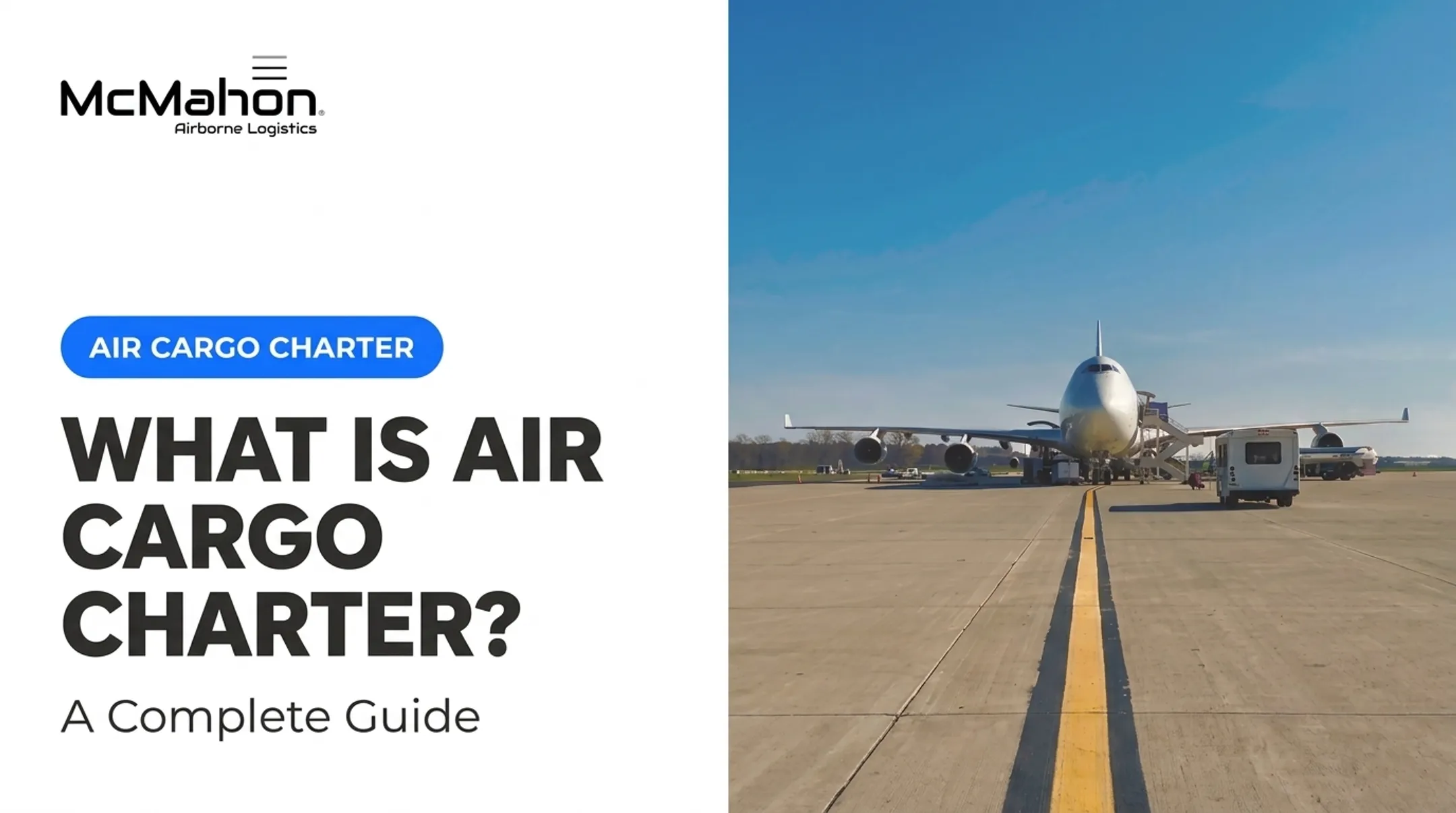
- Fixed-wing jets and turboprops for long-range, higher-volume shipments between airports
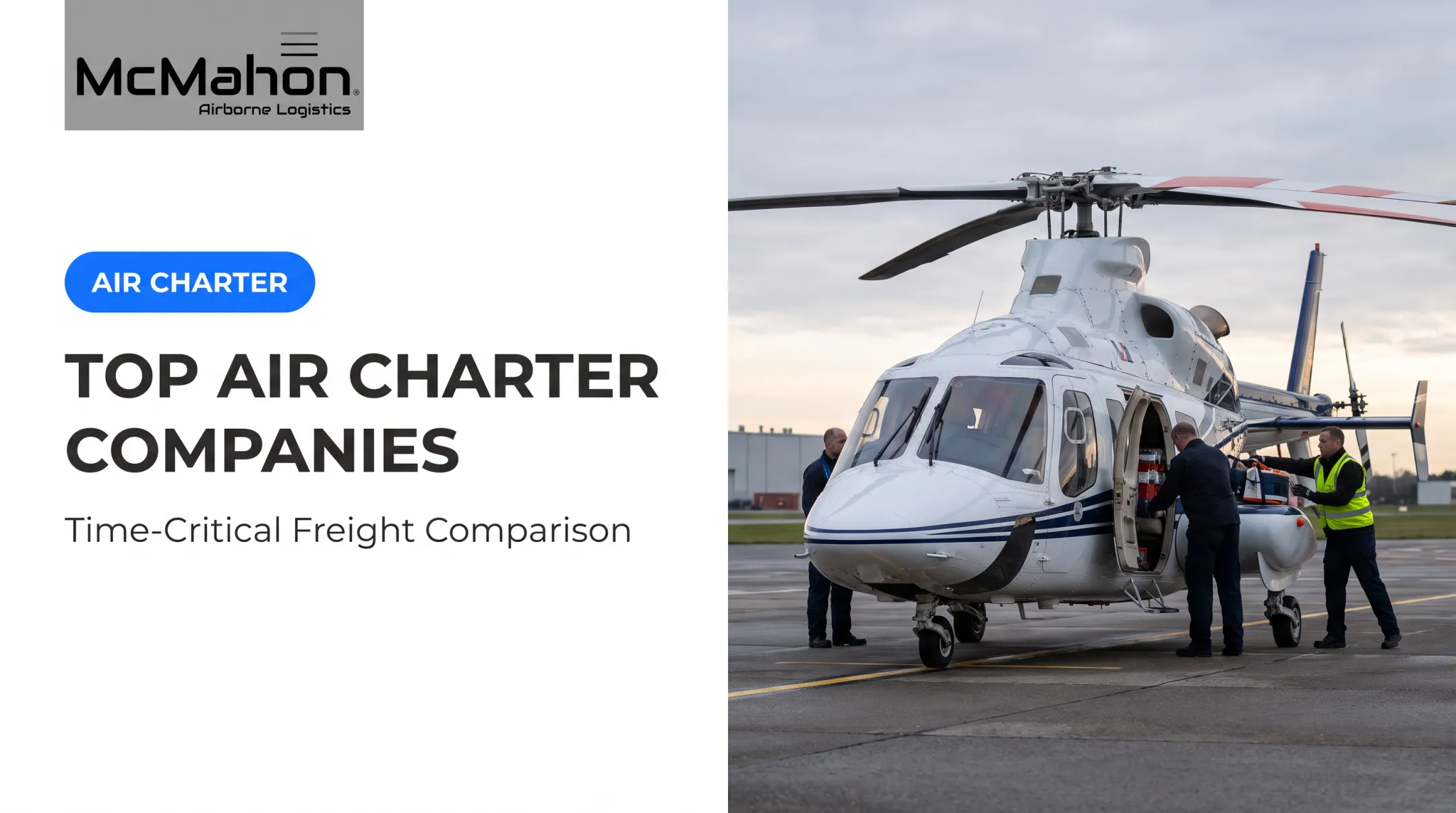
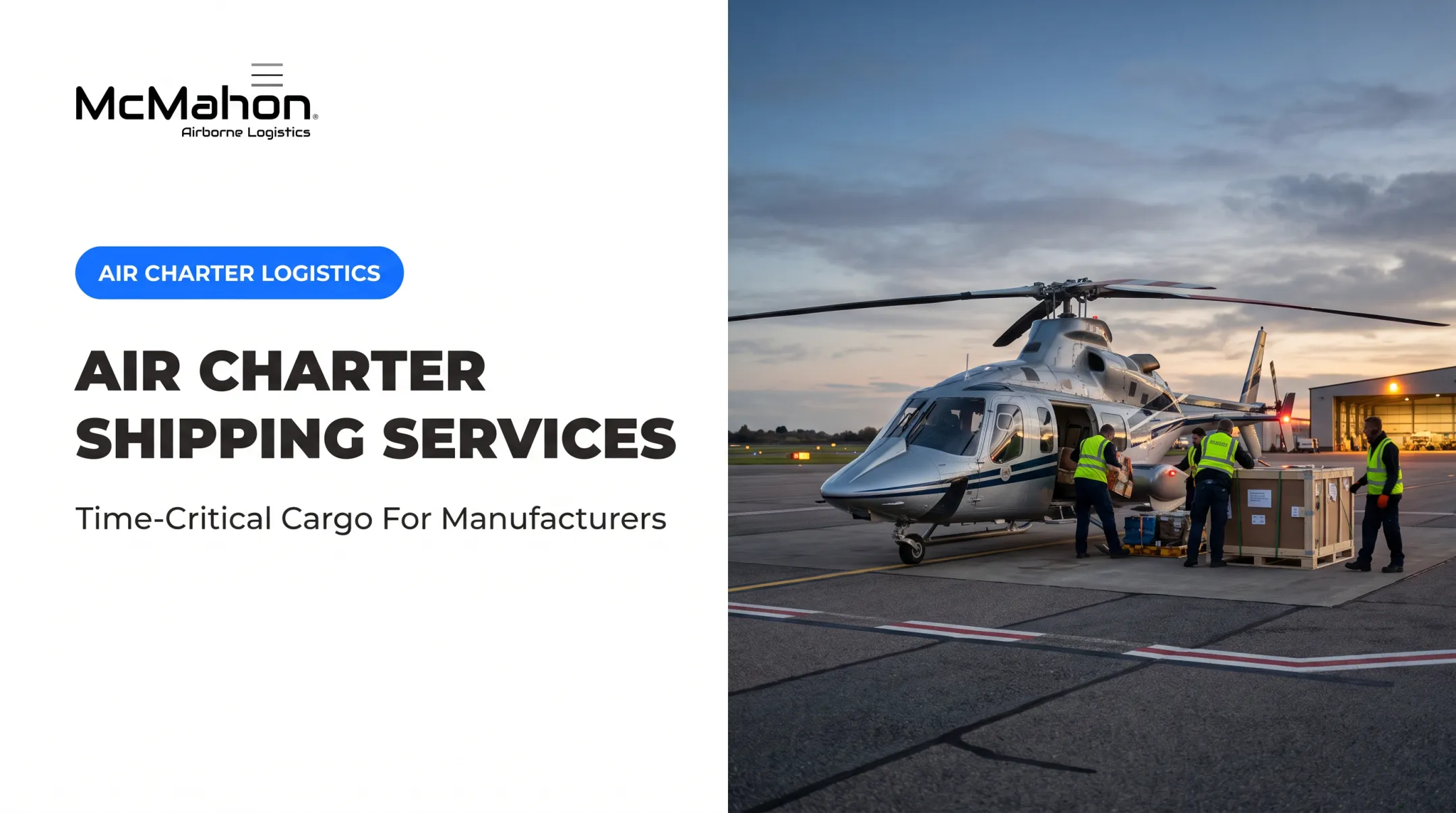
- Helicopters for short and medium-range freight, especially when the destination doesn't have convenient airport access
Boeing 737 freighters, for example, can carry up to 36 standard containers and roughly 30,000 pounds at 500 mph, making them solid for cross-country runs. Helicopters trade range for flexibility, landing at plant sites, job sites, or remote facilities that a fixed-wing aircraft simply can't reach.

Core Components of an Air Cargo Charter Service
A charter quote is more than "we have a plane." Here's what actually makes up the service:
- Aircraft and fleet access: Dedicated fleets (aircraft the provider owns) respond faster and offer more control than capacity brokered from third parties at the last minute
- Ground logistics integration: First-mile and last-mile trucking must sync with the flight—a on-time landing with no truck waiting is two problems, not door-to-door service
- Regulatory and documentation handling: Permits, customs paperwork, and Air Waybills must be managed correctly; a bad Air Waybill (the contract of carriage) can strand cargo on the tarmac
Benefits of Using an Air Cargo Charter Provider
- Faster delivery for AOG (aircraft-on-ground) emergencies and production-line shutdowns
- Access to remote sites or facilities without airport infrastructure
- Reduced handling touches, which lowers damage risk for sensitive cargo
- Dedicated capacity for oversized freight that won't fit on scheduled flights

What to Consider When Choosing an Air Cargo Charter Provider
These factors matter more or less depending on your shipment's urgency, cargo type, and destination access. Comparing providers against them connects technical capability to the outcomes you actually care about: cost, downtime, and delivery certainty.
Response Time and 24/7 Availability
For AOG and emergency shipments, round-the-clock quoting and dispatch is essential.
Key metric: time from initial call to wheels-up. Some providers can source options in as little as 15 minutes and get a helicopter airborne within 10 to 15 minutes during business hours (45 to 60 minutes after hours). If a provider can't give you a specific number, that's a warning sign.
Fleet Type and Reach (Fixed-Wing vs. Helicopter)
Helicopter access removes your dependency on airport infrastructure entirely. For short and medium-range premium freight, that's a clear advantage: plant-to-plant delivery without ever touching a runway.
Key metric: the percentage of destinations the provider can reach without a ground transfer. A provider with only fixed-wing capability will need trucking on both ends for any non-airport pickup or delivery.
Door-to-Door / Integrated Ground Coordination
A single quote covering both the air leg and the ground legs reduces handoffs, which reduces the chance of delay. Every extra vendor in the chain is another point of failure.
Key metric: number of separate vendors or handoffs required to complete the shipment. Fewer is better.
Regulatory Compliance and Documentation Support
Mishandled permits, customs data, or hazmat documentation can strand a shipment before it ever leaves the ground. U.S. Customs and Border Protection requires advance electronic cargo data from the carrier, with the deadline for many domestic departures set at wheels-up for the inbound flight.
Canada's rules are similarly strict: cargo data must be validated at least four hours before arrival.
Key metric: on-time customs clearance rate. Ask providers directly how they handle documentation cutoffs and who owns the process if something goes wrong.
Experience with Specialized or Sensitive Cargo
Not every provider has handled oversized, high-value, or time-critical freight before. Track record matters here, especially for cargo that can't tolerate rough handling or delay.
Key metric: claims and damage rate history. A provider should be able to speak to this without hesitation.

Cost Transparency and Total Value
All-inclusive quotes covering fuel, permits, and ground handling prevent surprise charges after the fact. Charter pricing varies significantly by aircraft type, cargo nature, and route, so there's no universal rate card to compare against, which makes an itemized, all-in quote even more important.
Key metric: quote-to-final-invoice variance. If the final bill routinely differs from the quote, that's a transparency problem.
How McMahon Airborne Logistics Can Help
For time-critical shipments across the U.S., McMahon Airborne Logistics pairs a dedicated helicopter fleet with a long-range jet and turboprop network. Here’s how that model differs from a typical broker:
- Dedicated helicopter fleet for short- and medium-range premium freight; airports optional in most cases, with a 600-mile coverage radius per aircraft
- Turnkey door-to-door service combining air and ground legs in a single quote
- 24/7 quoting and coordination, with sourcing times as fast as 15 minutes
- Long-range charter access through FAA-licensed Part 121 and Part 135 carrier partners for jet and turboprop capacity
- In-house maintenance and logistics software, with real-time tracking on web and iOS
- 45 years of operational experience since 1980 as an asset-based air carrier, ground carrier, and broker in one

That combination means a single call can cover a plant-to-plant helicopter run in Michigan or a cross-country jet charter with ground delivery baked into the quote.
Conclusion
Match your air cargo charter provider to the shipment: urgency, cargo type, and destination access. A helicopter-equipped provider might be the right call for a plant-to-plant emergency part delivery. A jet network might be the answer for a cross-country oversized shipment.
Provider evaluation shouldn't be a one-time decision. Revisit it as your shipping needs change. Before your next time-critical shipment lands on your desk, compare providers on response time, network reach, and door-to-door coordination — not just price.
Frequently Asked Questions
How much does it cost to charter an air cargo plane?
Cost depends on aircraft type, distance, weight, and urgency, ranging from light aircraft to wide-body freighters. There's no reliable universal rate card, so request a direct, itemized quote for accuracy.
What regulations apply when chartering an air cargo plane?
You'll need FAA compliance from the operating carrier, proper Air Waybill documentation, and customs/import data submitted on time. Hazardous materials shipments require additional acceptance and handling procedures.
What pilot qualifications are required for air cargo charter?
Charter pilots must hold appropriate FAA certifications and type ratings for the aircraft they fly, along with minimum flight-hour requirements under Part 135. Most reputable carriers set additional training and safety standards beyond the federal floor.
How quickly can an air cargo charter be arranged?
Emergency charters can often be arranged within hours thanks to 24/7 provider availability, with some sourcing options in as little as 15 minutes. Planned charters allow more lead time, which typically results in better pricing.
Can a helicopter be used for air cargo charter?
Yes. Helicopters handle short and medium-range premium freight and can land at facilities without airport access, unlike fixed-wing aircraft. That makes them ideal for plant-to-plant delivery.
What's the difference between an air charter broker and an asset-based carrier?
A broker sources aircraft from third-party operators, while an asset-based carrier owns and operates its own fleet. Asset-based carriers often mean faster response times and more direct accountability for the shipment.